

Expanding Our Reach in South America: Meet Mario de Melo
We’re pleased to welcome Mario de Melo as Heat Management’s new representative in South America. With strong technical expertise and regional insight, Mario will help expand our reach and bring our solutions to new markets. After connecting through our Sales Manager Johan Holmér, we took the opportunity to ask Mario a few questions about his background and the potential for Heat Management in the region.
Q: Can you please explain your background?
I am a Brazilian mechanical engineer with a strong result driven management profile and solid experience in Sales and Service Management, Business Development, Contract Management, and Project Management. I spent 15 years working in leading companies within the pulp and paper industry, focusing on Chemical Recovery, Utilities, and Capital Projects. Later, I worked for 16 years at Diamond Power International Inc., a U.S. based company, where I was responsible for Business Development in South America.
Q: What do you enjoy most about your work? What motivates you?
I enjoy working with a focus on results and contributing positively to the projects I’m involved in. I see challenges especially in process optimization, project management, and business development as valuable opportunities for continuous learning. I believe in lifelong learning and in building trust-based professional relationships.
In short, I am motivated by achieving goals, generating value for the business, and supporting the growth and development of those around me.
Q: Why did you choose to work as a partner with Heat Management?
What drew my interest in partnering with Heat Management was the strong alignment between the company’s focus and my professional background in process optimization and results orientation. This synergy highlights a high potential for a successful and impactful partnership.
Q: What are Brazil’s most significant challenges for the energy industry today?
Brazil’s energy transition faces structural challenges that demand urgent and coordinated action. The heavy reliance on hydropower makes the system vulnerable to prolonged droughts, compromising energy security and increasing operational costs.
At the same time, the renewable energy sector, despite its recent rapid growth, is experiencing a crisis due to transmission infrastructure constraints, high financial costs, and regulatory uncertainty, leading to reduced investments and the shutdown of operations. Furthermore, supporting industrial modernization is essential to ensure competitiveness in the face of the demands of a low-carbon economy.
Q: How do you think Heat Management’s solutions fit into the current state of the market?
I consider Heat Management’s solution, particularly the HISS® system, to be technically superior to currently available technologies for sootblowing optimization in recovery boilers within the pulp and paper industry, including so-called “smart sootblowing” systems. Its advantages include technological simplicity, lower implementation and maintenance costs, and proven effectiveness in improving sootblowing performance, directly contributing to increased boiler availability and reduced maintenance and operational costs.
A recent notable example comes from Mogi Guaçu, near São Paulo, where the customer’s recovery boiler has achieved steam savings exceeding 35%. The unit is operating more cleanly, and furnace pressure stability is at its best on record, resulting in significantly reduced carryover.
Q: What’s next for our partnership together? Are there any upcoming projects or events you’re excited about?
In the Brazilian context, the pulp and paper industry presents the highest potential for the successful implementation of Heat Management’s solutions. Based on an assessment of current chemical recovery boiler operations, smaller units, often with operational constraints, are expected to achieve the most significant benefits from adopting the HISS® system, particularly in terms of reducing operational costs (e.g., steam consumption) and increasing boiler availability.


Latest news & articles

Expanding Our Reach in South America: Meet Mario de Melo
Expanding Our Reach in South America: Meet Mario de [...]

Heat Management welcomes Mårten Ekberg
We're happy to welcome Mårten Ekberg to the team! He [...]
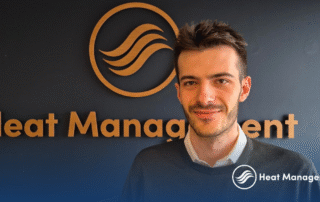
Meet Felix Olivecrona, our new Sales Coordinator
Felix Olivecrona joined us back in August last year. We [...]
Expanding Our Reach in South America: Meet Mario de Melo
August 14, 2025 /

Expanding Our Reach in South America: Meet Mario de Melo
We’re pleased to welcome Mario de Melo as Heat Management’s new representative in South America. With strong technical expertise and regional insight, Mario will help expand our reach and bring our solutions to new markets. After connecting through our Sales Manager Johan Holmér, we took the opportunity to ask Mario a few questions about his background and the potential for Heat Management in the region.
Q: Can you please explain your background?
I am a Brazilian mechanical engineer with a strong result driven management profile and solid experience in Sales and Service Management, Business Development, Contract Management, and Project Management. I spent 15 years working in leading companies within the pulp and paper industry, focusing on Chemical Recovery, Utilities, and Capital Projects. Later, I worked for 16 years at Diamond Power International Inc., a U.S. based company, where I was responsible for Business Development in South America.
Q: What do you enjoy most about your work? What motivates you?
I enjoy working with a focus on results and contributing positively to the projects I’m involved in. I see challenges especially in process optimization, project management, and business development as valuable opportunities for continuous learning. I believe in lifelong learning and in building trust-based professional relationships.
In short, I am motivated by achieving goals, generating value for the business, and supporting the growth and development of those around me.
Q: Why did you choose to work as a partner with Heat Management?
What drew my interest in partnering with Heat Management was the strong alignment between the company’s focus and my professional background in process optimization and results orientation. This synergy highlights a high potential for a successful and impactful partnership.
Q: What are Brazil’s most significant challenges for the energy industry today?
Brazil’s energy transition faces structural challenges that demand urgent and coordinated action. The heavy reliance on hydropower makes the system vulnerable to prolonged droughts, compromising energy security and increasing operational costs.
At the same time, the renewable energy sector, despite its recent rapid growth, is experiencing a crisis due to transmission infrastructure constraints, high financial costs, and regulatory uncertainty, leading to reduced investments and the shutdown of operations. Furthermore, supporting industrial modernization is essential to ensure competitiveness in the face of the demands of a low-carbon economy.
Q: How do you think Heat Management’s solutions fit into the current state of the market?
I consider Heat Management’s solution, particularly the HISS® system, to be technically superior to currently available technologies for sootblowing optimization in recovery boilers within the pulp and paper industry, including so-called “smart sootblowing” systems. Its advantages include technological simplicity, lower implementation and maintenance costs, and proven effectiveness in improving sootblowing performance, directly contributing to increased boiler availability and reduced maintenance and operational costs.
A recent notable example comes from Mogi Guaçu, near São Paulo, where the customer’s recovery boiler has achieved steam savings exceeding 35%. The unit is operating more cleanly, and furnace pressure stability is at its best on record, resulting in significantly reduced carryover.
Q: What’s next for our partnership together? Are there any upcoming projects or events you’re excited about?
In the Brazilian context, the pulp and paper industry presents the highest potential for the successful implementation of Heat Management’s solutions. Based on an assessment of current chemical recovery boiler operations, smaller units, often with operational constraints, are expected to achieve the most significant benefits from adopting the HISS® system, particularly in terms of reducing operational costs (e.g., steam consumption) and increasing boiler availability.
Latest news & articles
Expanding Our Reach in South America: Meet Mario de Melo
Expanding Our Reach in South America: Meet Mario de [...]
Heat Management welcomes Mårten Ekberg
We're happy to welcome Mårten Ekberg to the team! He [...]
Meet Felix Olivecrona, our new Sales Coordinator
Felix Olivecrona joined us back in August last year. We [...]